

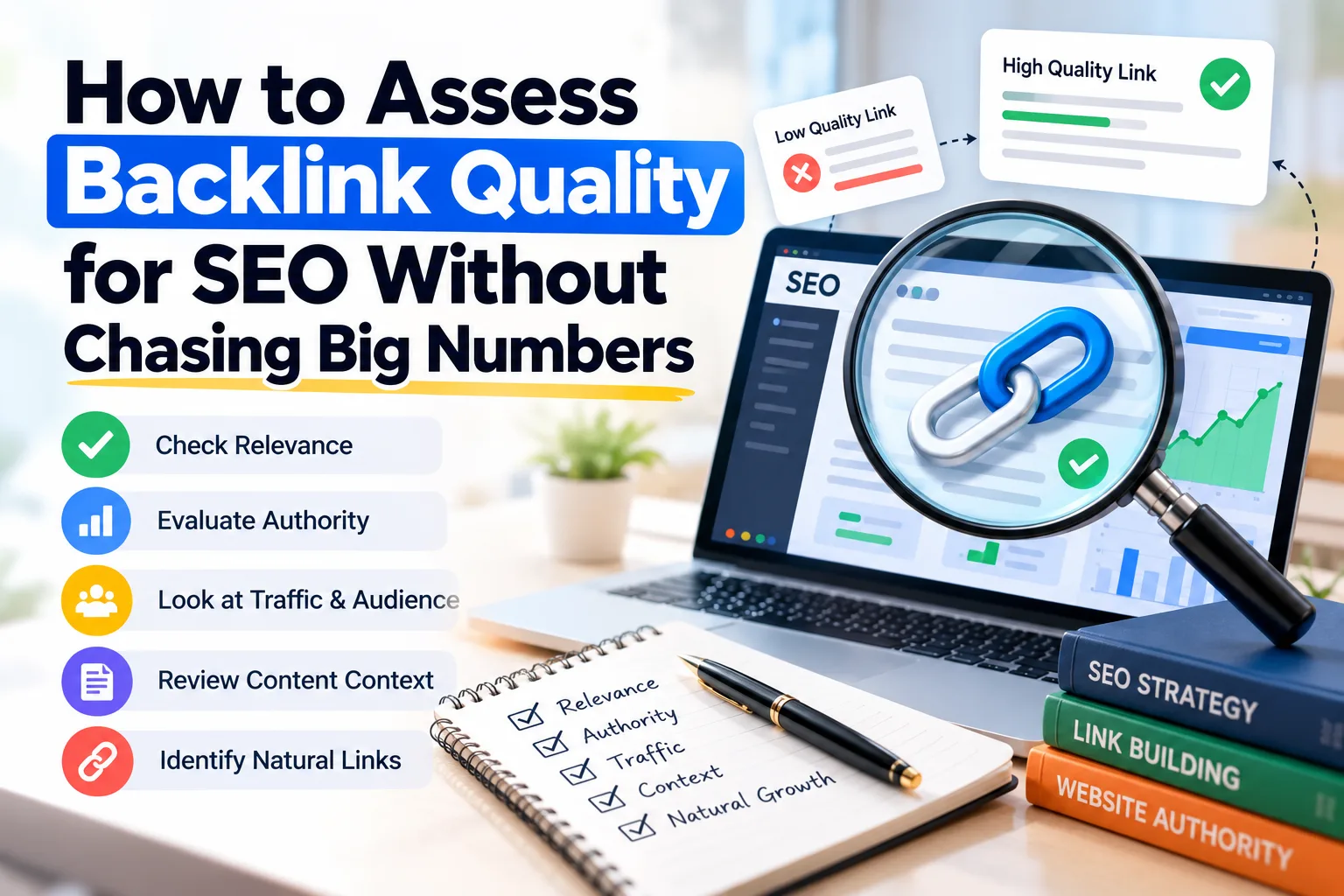
When a website’s search rankings stall, it is tempting to assume the solution is simply more backlinks. But a large link count can hide weak, irrelevant or manipulative placements, while a smaller set of useful links may support stronger visibility. Knowing how to assess backlink quality for SEO helps businesses decide where to invest time and money—and avoid treating every link as a vote of confidence.
Start with relevance, not authority scores
A backlink is most useful when it makes sense in context. A link to a payroll software company from an article about small-business accounting is a natural fit. A link from an unrelated page about travel deals is harder to justify, even if the site has impressive-looking metrics.
Ask what the linking page is about, who it serves and whether its readers might reasonably want to visit your site. Relevance does not require an exact industry match. A business publication discussing workplace technology could link appropriately to a cybersecurity provider, for example. The key is a credible connection between the content and the destination.
Examine the page and the site behind the link
Do not evaluate a backlink from a domain score alone. Open the page and read it. Is the article written for people, with a clear subject and useful detail? Does it have a recognizable editorial purpose? Or does it appear to exist mainly to place links, with awkward phrasing, shallow content and a jumble of unrelated topics?
Look at a few other pages on the same site. A legitimate publication usually has a discernible audience and consistent subject matter. A site that publishes hundreds of thin posts across unrelated niches may be offering little lasting value, regardless of its headline metrics.
Tools can help you review traffic estimates, referring domains and other signals, but treat those numbers as clues rather than verdicts. Metrics vary by provider, can lag behind real changes and may be distorted. A low-traffic specialist site can still reach the right audience; a high-traffic site can have a page that is irrelevant to your business.
Check placement, purpose and anchor text
Where a link appears matters. An editorial link within a relevant explanation is generally more meaningful than a link buried in a footer, an author bio or a crowded list of sponsors. Consider whether the link helps readers understand a point, find a resource or take a reasonable next step.
Anchor text—the words that form the link—should also fit the sentence. Branded names, page titles and descriptive phrases can all be natural choices. Repeatedly using the same exact commercial keyword across many links can look artificial and may signal an attempt to manipulate rankings. A varied, reader-friendly anchor profile is more credible than a collection of identical keyword phrases.
Also check whether the link is marked as sponsored or otherwise qualified. Paid placements should be handled transparently and in line with search engine guidance. A link’s value is not measured only by whether it passes ranking signals: a clearly labeled placement can still introduce your business to relevant readers.
Consider the real cost of a link
Link building has a cost even when no invoice is involved. Research, outreach, writing and follow-up all take time. Compare that effort with the likely benefits: relevant referral visits, brand exposure, relationships with publishers and a useful signal for search engines. Be cautious of promises of a fixed number of links or guaranteed rankings. Search performance depends on many factors, and no backlink count can guarantee a position.
For a broader discussion of quantity and ranking expectations, this guide to backlink needs can help put link counts in perspective. Use it as a starting point, then judge individual opportunities against your own site, competitors and goals.
Build a practical review process
A simple evaluation checklist makes decisions more consistent. Before pursuing or keeping a link, record:
- Relevance: Does the page’s subject connect naturally to your business or audience?
- Editorial quality: Is the content substantial, readable and created for a clear readership?
- Placement: Does the link appear in a context where it genuinely helps?
- Site pattern: Does the wider publication look coherent and maintained?
- Purpose: Is the opportunity based on a real contribution or relationship, rather than a ranking guarantee?
Keep a record of the linking page, anchor text, date, relationship and any referral activity. Revisit important links periodically, especially if a site changes direction or removes the page. This helps you spot patterns in successful outreach and prevents teams from judging campaigns only by the number of links acquired.
Quality connects SEO to the wider business
The strongest link opportunities often come from work that is valuable beyond search: useful research, expert commentary, practical guides, thoughtful partnerships and dependable service. For freelancers and small firms, that principle applies to their own online presence too. A freelancer profile description sample can offer ideas for explaining expertise clearly; marketplaces such as Osdire also help buyers discover specialists across fields from design to marketing.
Ultimately, backlink quality is a judgment about fit, credibility and usefulness—not a single score. Favor links that make sense to a human reader, support a clear business goal and come from pages worth visiting on their own. That approach produces a more durable link profile than chasing numbers for their own sake.