

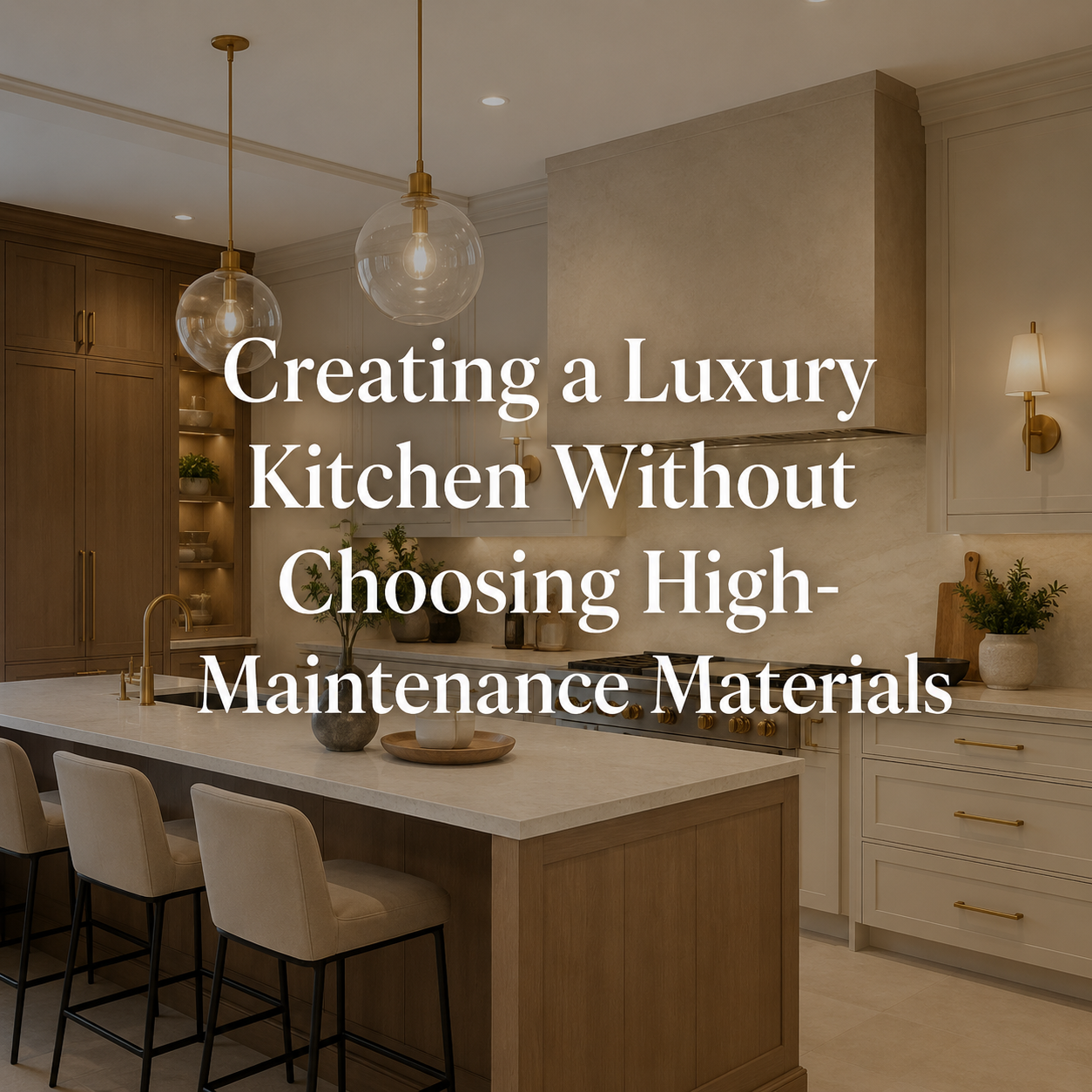
A lot of kitchen renovations begin with inspiration photos and expensive-looking finishes. Then reality sets in. Marble stains after a wine spill, timber surfaces need constant sealing, and glossy cabinets start showing fingerprints within days. What initially looked elegant quickly becomes difficult to maintain in a busy household.
This is one of the biggest mistakes homeowners make when designing a luxury kitchen. They focus entirely on appearance without considering long-term practicality. A kitchen can still feel refined and visually impressive without relying on materials that demand constant upkeep. The key is choosing surfaces and finishes that balance durability, ease of maintenance, and timeless design.
Why High-Maintenance Kitchens Become a Problem
Many luxury kitchens are built around delicate materials that require ongoing care. Natural marble, untreated timber, and some porous stone surfaces can scratch, stain, or wear unevenly over time. This becomes frustrating in kitchens used daily for cooking, entertaining, and family life.
Acidic foods, oils, heat, moisture, and regular cleaning gradually affect surfaces that are not designed for heavy use. Some materials also require frequent sealing or specialised cleaning products to maintain their appearance. Over time, maintenance stops feeling like occasional care and starts becoming a constant responsibility.
This is why more homeowners are now prioritising practicality alongside aesthetics.
Choosing Durable Benchtop Materials
Benchtops usually experience the most wear in a kitchen. They handle heat, spills, chopping, moisture, and heavy cookware every day. Natural stone remains visually appealing, but some varieties can be porous and vulnerable to etching or staining. Timber benchtops create warmth but generally need regular oiling and careful moisture management.
A growing number of homeowners are instead choosing surfaces designed specifically for durability and lower maintenance. A porcelain benchtop has become increasingly popular because it combines a clean, modern appearance with strong resistance to stains, scratches, and heat. Porcelain is also non-porous, which means it does not absorb liquids or require sealing like many natural stones.
This makes it particularly practical in kitchens where durability matters just as much as appearance. However, material selection should still consider lifestyle. While porcelain performs well under daily use, poorly installed edges can chip if exposed to heavy impact. Proper fabrication and installation remain important for long-term performance.
Avoiding Overly Glossy Finishes
High-gloss cabinetry often appears luxurious in display showrooms, but it tends to highlight fingerprints, smudges, and dust very quickly. In family kitchens or high-traffic spaces, this can create a constant cleaning cycle.
Matte and satin finishes usually provide a more forgiving alternative. They soften reflections, hide marks more effectively, and still create a polished look without requiring constant wiping.
Textured laminate finishes have also improved significantly in recent years. Many now replicate timber grain or painted cabinetry convincingly while requiring far less upkeep than natural materials. The result is a kitchen that still feels refined without becoming difficult to maintain.
Simplifying Splashbacks and Joinery
Complex tile patterns, heavy grout lines, and highly textured splashbacks often become harder to clean over time. Grease, dust, and cooking residue accumulate quickly in uneven surfaces and grout joints. Large-format splashbacks create a cleaner and more practical solution.
Fewer joints mean less maintenance and easier cleaning. Neutral finishes also age better visually, reducing the need for cosmetic updates later.
The same principle applies to cabinetry design. Excessively detailed joinery may look impressive initially, but it often dates faster and collects more dust and grime. Simple lines, integrated handles, and restrained detailing usually create a more timeless appearance.
Why Low-Maintenance Does Not Mean Plain
One common misconception is that practical kitchens must feel cold or basic. In reality, luxury often comes from restraint, consistency, and thoughtful material choices rather than expensive or delicate finishes.
Warm lighting, layered textures, quality hardware, and cohesive colour palettes can make a kitchen feel sophisticated without relying on difficult materials. Stone-look porcelain, timber-look laminates, and brushed metal finishes now offer highly realistic appearances with significantly less maintenance than their natural counterparts.
The goal is not to imitate luxury superficially. It is to create a kitchen that still feels elegant after years of daily use.
Designing for Real Daily Use
A kitchen should function well under normal living conditions, not just in styled photographs. This means thinking realistically about cleaning routines, cooking habits, children, pets, and entertaining.
Surfaces that constantly show marks or require specialised care quickly become stressful in busy households. Practical design choices reduce long-term frustration.
Soft-close drawers, durable flooring, stain-resistant surfaces, and easy-to-clean cabinetry all contribute to a kitchen that remains functional and visually appealing over time. Good design considers how the space will actually be used.
Balancing Style and Longevity
Trends change quickly, especially in kitchen design. Highly decorative finishes or dramatic colour choices may feel dated within a few years. Neutral materials and durable finishes generally provide better long-term flexibility.
This does not mean every kitchen needs to look minimalist or plain. Texture, lighting, and carefully selected feature elements can still create visual interest.
The difference is that the foundation of the kitchen remains practical and sustainable. A well-designed kitchen should still feel attractive years later without demanding constant repair or upkeep.
Conclusion
Luxury kitchens no longer need to rely on fragile or high-maintenance materials to feel sophisticated. Modern homeowners increasingly want spaces that combine visual appeal with practicality. Durable surfaces, simplified finishes, and thoughtful layouts create kitchens that are easier to maintain while still feeling refined and contemporary.
Choosing materials carefully from the beginning helps avoid ongoing frustration later. A kitchen designed for real daily use will almost always age better than one designed purely around appearance.
The best luxury kitchens are not necessarily the most delicate. They are the ones that continue functioning beautifully long after the renovation is complete.
FAQs
1. Are porcelain benchtops difficult to maintain?
No. Porcelain surfaces are generally low-maintenance because they are non-porous and resistant to stains and heat.
2. Do matte kitchen finishes show less dirt?
Yes. Matte and satin finishes usually hide fingerprints, smudges, and dust better than glossy surfaces.
3. What kitchen materials require the most maintenance?
Natural marble, untreated timber, and highly porous stone surfaces often require regular sealing and careful cleaning.
4. Is a porcelain benchtop suitable for family kitchens?
Yes. Porcelain is commonly chosen for busy kitchens because of its durability and resistance to everyday wear.
5. Can low-maintenance kitchens still look luxurious?
Absolutely. Texture, lighting, clean lines, and cohesive materials often create a more timeless luxury aesthetic.
6. Do large-format splashbacks reduce cleaning?
Yes. Fewer grout lines and joins make splashbacks easier to clean and maintain over time.