

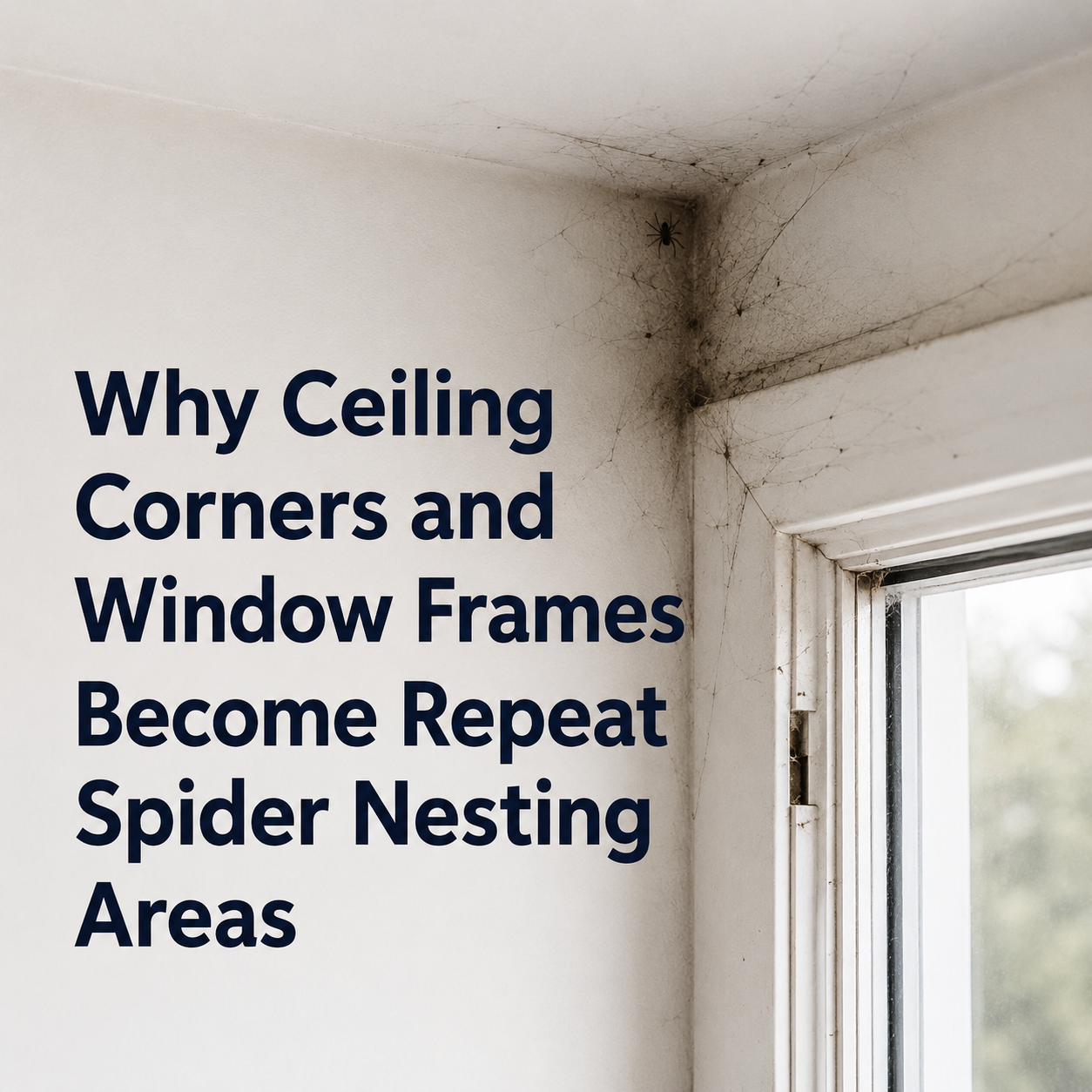
You clean away a spider web from the ceiling corner, only to find another one in the exact same spot days later. The same thing happens around window frames, behind curtains, or near flyscreens. For many Australian households, these repeat nesting areas become an ongoing frustration, especially during warmer months when spider activity increases indoors.
What many people do not realise is that spiders are highly selective about where they settle. If webs repeatedly appear in the same ceiling corners or around the same windows, there is usually a reason behind it. Understanding why these areas attract spiders can help reduce recurring infestations and improve long-term prevention.
Why Spiders Prefer Ceiling Corners and Window Frames
Spiders naturally look for quiet, undisturbed areas that provide shelter and reliable access to prey. Ceiling corners and window frames meet all of these conditions. Corners give spiders stable anchor points for building webs. The meeting point between two walls or between the wall and ceiling creates structural support that helps webs remain secure. These areas are also less likely to be disturbed by daily household activity.
Window frames attract spiders for another reason. Insects are commonly drawn towards windows because of light, airflow, and small entry gaps. Since spiders feed on insects, they often position themselves close to these food sources. Spiders also prefer darker or sheltered sections around blinds, curtains, flyscreens, and external window ledges. These locations provide protection while still allowing access to passing insects.
Why the Same Areas Keep Getting Reinfested
When spiders repeatedly return to the same locations, it usually indicates that the environment continues to support them. One major factor is insect activity. Spiders remain where food is consistently available. If small flying insects gather near windows or lights each evening, spiders are likely to return repeatedly.
Another issue is low disturbance. Ceiling edges, upper corners, and outer window frames are often missed during regular cleaning. Old webs may be removed partially while hidden egg sacs or web remnants remain behind. This allows spiders to re-establish themselves quickly.
Gaps around windows, vents, or roofing can also create entry points. Small openings make it easier for spiders and the insects they feed on to enter the home. Once spiders identify a reliable nesting area, they often continue using it.
Humidity and airflow also contribute. Some species prefer slightly damp or humid conditions, which are common around bathrooms, laundry windows, or poorly ventilated corners.
Signs That Nesting Is Becoming a Bigger Problem
A single web is not always a serious concern. However, repeated webbing in multiple rooms or persistent spider activity can indicate a larger issue. Fresh webs that reappear within days usually suggest active nesting nearby.
Egg sacs hidden in corners, behind curtains, or inside window tracks are another warning sign. If left undisturbed, they can release many spiderlings into the surrounding area.
You may also notice small insects increasing indoors. Since spiders follow prey, ongoing spider activity sometimes points to a separate insect problem that should also be addressed. In some homes, spiders begin spreading from corners into wardrobes, storage areas, garages, and roof spaces. At that stage, simple cleaning may no longer be enough to control the issue effectively.
Why DIY Cleaning Often Fails
Many homeowners rely on surface cleaning alone. While removing visible webs helps temporarily, it rarely addresses the underlying causes. Vacuuming corners and window frames removes current webs, but spiders may return quickly if food sources, entry points, and nesting conditions remain unchanged.
Incomplete cleaning is another common issue. Egg sacs are often hidden inside cracks, curtain folds, or behind furniture near windows. Missing even a small number of eggs can allow the infestation cycle to continue.
Outdoor lighting can also unintentionally worsen the problem. Bright exterior lights attract insects at night, which then attract spiders around windows and eaves. Without addressing these contributing factors, repeated nesting usually continues.
Practical Ways to Reduce Repeat Spider Nesting
Reducing spider activity starts with limiting the conditions that attract them. Regular cleaning is important, especially in overlooked ceiling corners, window tracks, blinds, and behind furniture. Vacuuming webs completely helps remove both spiders and egg sacs before they hatch.
Sealing cracks and gaps around windows, doors, flyscreens, and vents can reduce entry points significantly. Homes with damaged screens or poorly sealed frames tend to experience higher spider activity indoors.
Managing insect populations also helps. Reducing outdoor lighting near windows, keeping food sealed, and controlling moisture can make the environment less attractive to insects and, therefore, less attractive to spiders. Decluttering storage areas and improving ventilation in humid rooms can further reduce nesting opportunities.
In persistent cases, professional spider removal may become necessary, especially when webs repeatedly return despite cleaning efforts or when venomous species are involved.
When Professional Help Becomes Important
Repeated spider nesting sometimes points to a larger environmental issue that is difficult to manage alone. Professional pest inspections can identify hidden entry points, surrounding insect activity, and external nesting zones that homeowners may overlook. Treatments may focus not only on spiders themselves but also on reducing the insects attracting them indoors.
This becomes particularly important if spiders are appearing frequently in bedrooms, children’s rooms, roof cavities, or high-traffic living spaces. Professional treatment can also help manage species that pose health concerns, especially in regions where redbacks or other venomous spiders are common.
Conclusion
Ceiling corners and window frames are not random places for spider activity. These areas provide shelter, structural support, and reliable access to insects, making them ideal nesting zones for many common household spiders.
When webs repeatedly appear in the same locations, it usually means the conditions attracting spiders remain unchanged. Food sources, entry points, humidity, and undisturbed spaces all contribute to recurring infestations.
Early action is important. Regular cleaning, sealing gaps, reducing insect activity, and monitoring repeat nesting areas can help prevent larger infestations from developing. In more persistent situations, professional intervention may be the most effective long-term solution.
FAQs
1. Why do spiders always build webs in ceiling corners?
Ceiling corners provide stable anchor points, shelter, and low disturbance, making them ideal for web building.
2. Why do spiders gather around window frames?
Windows attract insects through light and airflow, which then attracts spiders searching for food.
3. Do recurring webs mean there is an infestation?
Not always, but repeated webbing in the same areas can indicate active nesting or favourable conditions indoors.
4. Can spiders lay eggs inside window frames?
Yes. Many spiders hide egg sacs in cracks, corners, flyscreens, or sheltered sections around windows.
5. Why do webs return so quickly after cleaning?
If insects, entry points, or hidden egg sacs remain, spiders often return to the same nesting areas rapidly.
6. When should I consider professional spider control?
Professional treatment may be necessary if spider activity becomes persistent, widespread, or involves venomous species.