

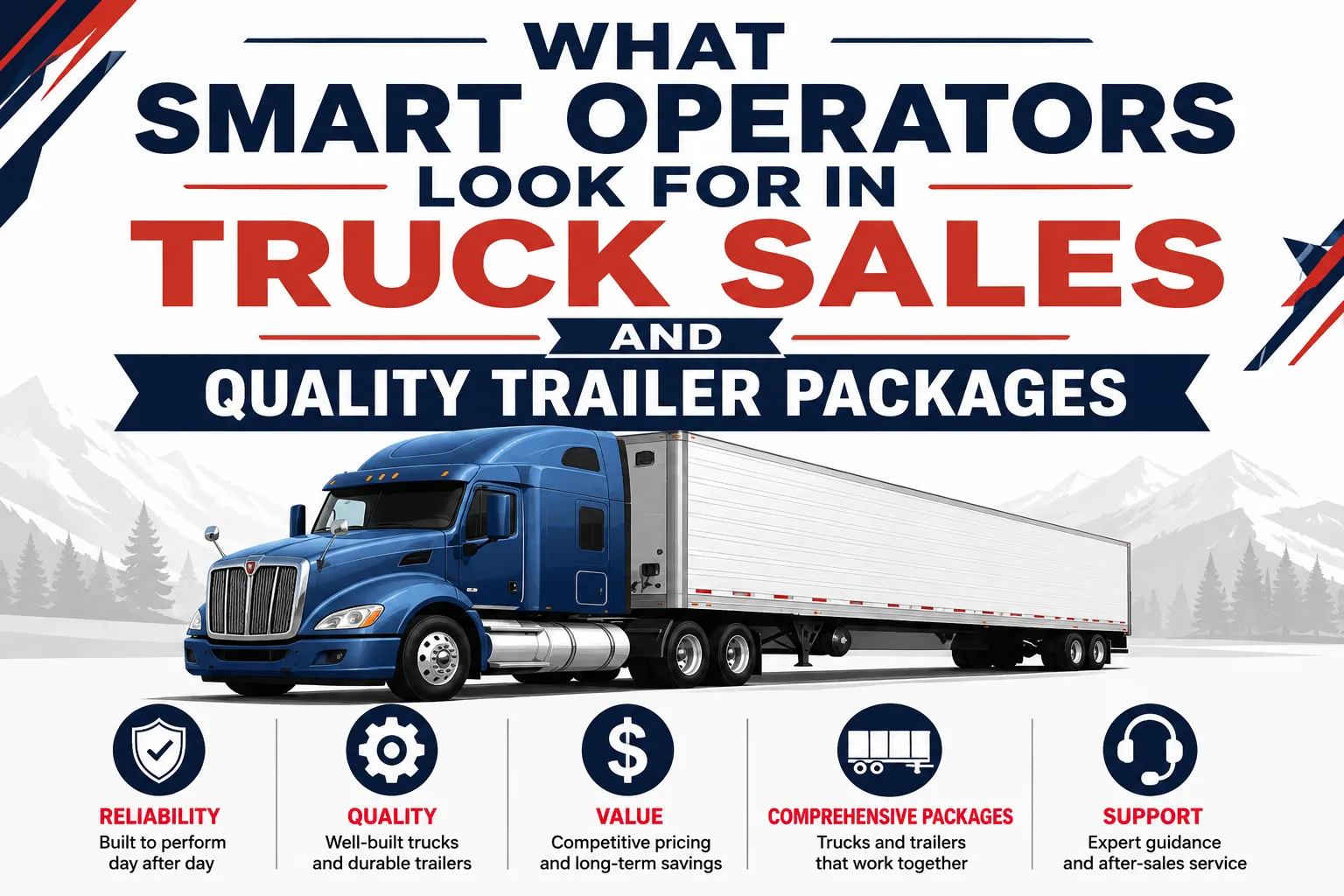
The Australian truck market recorded 19,526 new deliveries in the first half of 2026, down 13.5 per cent on the same period last year. The numbers tell the story of an industry stepping back from several years of record-breaking volume, adjusting to a combination of economic pressure, the ongoing transition to Euro 6 emission standards, and a supply of quality late-model used stock that has given operators alternatives to buying new.
But the correction does not signal weakness. It signals recalibration. Operators are still buying. Fleet renewal activity remains alive. The heavy-duty segment posted its strongest month of the year in June with 1,347 deliveries, and the end-of-financial-year rush pushed total monthly deliveries to 4,172, the highest single-month figure of 2026. What has changed is how operators are buying. They are more deliberate, more data-driven, and more focused on total cost of ownership than at any point in the past decade.
For businesses that depend on road transport to move freight, materials, and equipment across a country that covers 7.7 million square kilometres, the truck and trailer combination is the most important capital investment in the operation. A well-matched prime mover and quality trailer working together efficiently is the foundation of profitability. A mismatched combination, or a trailer that cannot withstand the demands placed on it, undermines everything the truck is trying to achieve.
This guide covers both sides of the equation. It addresses the truck market as it stands in 2026, the trailer types and quality indicators that Australian operators need to understand, how to match the right combination to your operation, and the financial, regulatory, and practical considerations that shape a smart purchasing decision.
Understanding the Truck Sales Market in 2026
The Australian truck market in 2026 reflects a period of transition. Total sales are down from the highs of 2024 and early 2025, but the underlying fundamentals that drive demand, including population growth, infrastructure spending, mining activity, and agricultural production, remain structurally sound.
What Is Driving the Current Market
Several factors are shaping truck sales in the current environment.
The transition to Euro 6 emission standards under ADR 80/04 is progressively changing the models available. Euro 6 compliant trucks offer improved fuel efficiency and lower emissions, but they come at a higher purchase price and require AdBlue and more sophisticated after-treatment systems. Some operators are accelerating purchases to secure pre-Euro 6 stock, while others are waiting for the new compliant models to become available in greater volume.
The supply of quality late-model used trucks has improved significantly following the closure of several high-profile transport operators in 2025. These vehicles, many with low kilometres and strong service histories, are offering operators an alternative to new purchases at substantially lower capital outlay.
Economic pressure, including elevated diesel prices driven by the ongoing global oil situation, is keeping a lid on discretionary fleet expansion. Operators are being more selective about when and what they buy, prioritising vehicles that deliver the strongest return on investment through fuel efficiency, reliability, and resale value.
Despite these headwinds, the heavy-duty segment has shown resilience throughout the first half of 2026. Kenworth and Volvo are competing fiercely for the top spot, DAF has more than doubled its early-year volumes, and Scania and Mercedes-Benz are posting solid numbers in the premium prime mover space. The message from the market is clear: operators are still investing, but they are investing more carefully.
New Versus Used in the Current Market
The new versus used decision has always been central to truck purchasing, but the current market conditions make it particularly relevant.
New trucks offer the latest engine technology, the most current safety systems, full manufacturer warranty, and the ability to specify the exact configuration you need. For high-utilisation operations where reliability and uptime are paramount, or where contracts require Euro 6 compliance, buying new remains the strongest option. With lenders actively competing for quality applications in a softer sales environment, financing rates are negotiable, and operators with a solid trading history are in a strong negotiating position.
Used trucks offer a lower capital entry point and reduced depreciation risk. The current supply of late-model used stock, including well-maintained fleet vehicles from operators that have exited the market, provides genuine value for businesses expanding their fleet, entering new markets, or deploying trucks in applications where harsh conditions limit the benefit of buying new.
For buyers evaluating both options, the critical variable is total cost of ownership over the expected life of the asset, not just the purchase price.
Why Trailer Quality Matters as Much as the Truck
A truck without a trailer is half a combination. Yet many operators invest considerable time and money selecting the right prime mover while treating the trailer as an afterthought. This is a costly mistake.
The trailer carries the payload. It determines how much you can legally load per trip, how safely the load is transported, and how efficiently the combination handles on the road. A quality trailer that is well-engineered, properly specified, and built from appropriate materials will maximise your payload within legal mass limits, maintain structural integrity under the repeated stress of loading, unloading, and road vibration, contribute to safer handling through correct weight distribution and braking performance, resist corrosion, fatigue, and wear over a working life that may span ten to twenty years, and hold its resale value better than a poorly built alternative.
A cheap trailer, by contrast, may cost less upfront but will cost you more in every subsequent year through higher maintenance, more frequent repairs, reduced payload capacity as structural weight increases, and earlier replacement.
Types of Trailers Available to Australian Operators
The Australian trailer market serves an extraordinarily diverse range of applications, and the right trailer type depends entirely on what you are carrying, where you are taking it, and how your operation is structured.
Flat-top and drop-deck trailers. Among the most versatile trailer types, flat-tops and drop-decks are used for general freight, machinery transport, building materials, and equipment haulage. Drop-deck trailers offer a lower loading height that accommodates taller loads within overall height limits and simplifies loading and unloading of heavy equipment.
Tipping trailers. Essential for construction, mining support, quarrying, and agricultural applications. Tipping trailers come in end-tipper, side-tipper, and belly-dump configurations, each suited to different materials and unloading requirements. Build quality is critical for tippers, as the repeated stress of tipping heavy loads places enormous demands on the chassis, hydraulic system, and tipping gear.
Curtain-siders and pantech trailers. Used extensively in general freight and logistics, curtain-siders offer weather protection with easy side-loading access. Pantech trailers provide fully enclosed protection for loads that require security and complete weather shielding.
Refrigerated trailers. Essential for the food supply chain, refrigerated trailers maintain temperature-controlled conditions for perishable goods. Build quality directly affects insulation performance, energy consumption, and the reliability of the refrigeration unit, all of which impact operating costs and product integrity.
Skeletal and container trailers. Designed to carry shipping containers between ports, rail terminals, and distribution facilities. The structural design must accommodate the weight and dimensions of standard 20-foot and 40-foot containers while meeting road mass and dimension regulations.
Tanker trailers. Used for transporting liquids and gases including fuel, water, chemicals, and food-grade products. Tanker trailers are subject to specific safety standards and require materials and construction methods appropriate to the substance being carried.
Livestock trailers. Designed for the safe and humane transport of animals, livestock trailers must meet specific design standards for ventilation, flooring, loading, and animal welfare compliance.
How to Evaluate Trailer Quality Before You Buy
Not all trailers are built to the same standard, and the differences are not always visible during a quick inspection. Here is what to look for.
Structural Design and Engineering
A quality trailer starts with sound engineering. The chassis must be designed to handle the loads it will carry over the terrain it will travel, with appropriate safety margins. Look for trailers designed and certified by qualified engineers, with documentation that demonstrates compliance with applicable Australian Standards and ADRs.
For Australian conditions, where trailers may operate on rough unsealed roads, carry heavy concentrated loads, and endure extreme temperature variations, structural design that accounts for these factors is essential. A trailer designed for smooth European highways may not survive a season on outback roads.
Materials and Construction
The materials used in trailer construction have a direct impact on weight, durability, corrosion resistance, and longevity. High-tensile steel is standard for structural components, but the grade, thickness, and treatment all matter. Aluminium is used in some applications to reduce tare weight and maximise payload capacity. Composite materials are increasingly appearing in panelling and flooring.
Weld quality is one of the most reliable indicators of overall build quality. Clean, consistent, properly penetrated welds indicate careful workmanship and attention to the structural requirements of each joint. Poor welds, visible grinding to hide defects, and inconsistent bead profiles suggest a build process where quality has been compromised.
Corrosion protection is critical for trailers operating in coastal areas, mining environments, or applications involving corrosive materials. Look for galvanised or hot-dip coated structural components, quality paint systems with appropriate preparation, and design features that prevent moisture and debris accumulation in structural cavities.
Running Gear and Components
The axles, suspension, brakes, wheels, and tyres are the components that connect the trailer to the road. Quality running gear from established manufacturers ensures reliable performance, consistent braking, predictable handling, and access to parts and service when maintenance is required.
Disc brakes are increasingly preferred over drum brakes for commercial trailers, offering better heat dissipation, more consistent stopping performance, reduced maintenance, and lower unsprung weight. Electronic Braking Systems provide controlled, proportional braking that improves stability, reduces tyre wear, and integrates with the prime mover’s braking system.
Air suspension is standard for most commercial trailer applications, offering a smoother ride that reduces load damage, chassis stress, and driver fatigue. The quality of the airbags, shock absorbers, and suspension components directly affects the trailer’s ride characteristics, maintenance requirements, and service life.
Compliance and Certification
Every trailer sold in Australia must comply with Australian Design Rules and applicable state mass and dimension regulations. Compliance documentation, including the trailer’s identification plate, ADR compliance certificate, and engineering certification where applicable, should be provided at the point of sale and retained for the life of the trailer.
For specialised trailers such as tankers, livestock crates, and refrigerated units, additional certifications may be required. Confirm that any specialised trailer you purchase meets all applicable standards for its intended application.
Matching the Right Truck and Trailer Combination
The truck and trailer must work as a matched pair. A mismatch between the prime mover’s capability and the trailer’s demands creates inefficiency, accelerated wear, safety risks, and compliance problems.
Engine power and torque. The engine must have sufficient power and torque to move the fully loaded combination safely and efficiently across the terrain you operate on. Underpowered combinations consume more fuel, create traffic hazards on hills and grades, and place excessive stress on the drivetrain.
Coupling compatibility. The prime mover’s turntable or coupling must be compatible with the trailer’s kingpin configuration, rated for the combined load, and positioned to achieve correct weight distribution across all axles.
Braking capacity. The combined braking system must be capable of stopping the fully loaded combination within the distances required by Australian Standards. Ensure the prime mover’s brake system is compatible with the trailer’s braking configuration, whether that is standard air brakes, EBS, or ABS.
Mass and dimension compliance. The combination must comply with the mass limits and dimension restrictions applicable to the roads you will operate on. This includes Gross Combination Mass, individual axle group weights, overall length, width, and height. Non-compliance creates safety risks, attracts penalties, and can void your insurance.
If you are exploring truck sales perth options for both trucks and trailers, comparing combinations that are correctly matched and properly specified for your operation is the best way to ensure you are investing in equipment that performs from day one.
Financing Trucks and Trailers
The financing structure you choose for your truck and trailer purchase affects your cash flow, tax position, and operational flexibility for years.
The most common options include chattel mortgage, where the lender provides funds and takes a mortgage over the equipment while you own it from day one. Finance lease, where the lender purchases the equipment and leases it to you for a fixed term. Operating lease, which provides use without long-term ownership commitment. And hire purchase, where you hire the equipment with the option to purchase at the end of the agreement.
In the current market environment, lenders are actively competing for quality applications. Operators with a solid trading history and a clear business case for the asset are in a strong position to negotiate favourable terms. The $20,000 instant asset write-off, now permanent for eligible businesses with turnover under $10 million, provides an immediate deduction for qualifying assets, though the threshold limits its impact on most heavy vehicle purchases.
Each financing structure has different implications for depreciation, GST, balance sheet presentation, and end-of-term flexibility. Engage your accountant and a commercial finance broker who understands the heavy vehicle sector before committing.
Regulatory Essentials for Truck and Trailer Operators
Operating a truck and trailer combination in Australia involves compliance with a layered regulatory framework.
Australian Design Rules. All new trucks and trailers must comply with ADRs covering emissions, braking, lighting, coupling, and safety standards. The transition to ADR 80/04 (Euro 6) is progressively changing which truck models are available and may affect the long-term viability of older vehicles on certain contracts.
Mass and dimension regulations. These vary by state, road classification, and vehicle configuration. Understanding the limits that apply to your intended routes is essential for specifying your combination correctly and operating within the law.
Chain of responsibility. Under the National Heavy Vehicle Law, every party in the transport supply chain shares responsibility for safety compliance, including mass, dimension, load restraint, speed, and fatigue. Penalties for breaches are substantial and apply to drivers, operators, consignors, loaders, and receivers.
Load restraint. The Load Restraint Guide provides the national standard for securing loads on heavy vehicles. Every load must be adequately restrained to prevent movement during transport, including under emergency braking and cornering conditions.
Fatigue management. Strict regulations govern driving hours and rest requirements. Electronic work diaries are becoming the standard compliance tool, and many current-model trucks offer integrated telematics that support fatigue monitoring.
Total Cost of Ownership for Truck and Trailer Combinations
Smart operators evaluate their purchasing decisions based on total cost of ownership, not sticker price.
Fuel typically represents 30 to 40 per cent of total operating costs. With diesel prices elevated throughout 2026, fuel efficiency is a more significant differentiator than ever.
Maintenance and repairs vary by brand, model, and build quality. A quality trailer with premium running gear and proper corrosion protection will cost less to maintain over its life than a cheaper alternative that requires frequent attention.
Insurance premiums depend on the value of the equipment, your claims history, and the nature of your operations. Obtain quotes before finalising your purchase.
Depreciation affects your eventual resale return. Trucks and trailers with strong brand recognition, quality build, and documented maintenance histories hold their value better.
Downtime is an often-underestimated cost. Every day your combination is off the road is a day without revenue. Reliability, parts availability, and service responsiveness all influence downtime.
Tyre costs are substantial for heavy vehicles and trailers, particularly in demanding conditions. Quality suspension and correct alignment reduce tyre wear and extend tyre life.
Frequently Asked Questions
What types of trailers are most commonly sold in Australia?
The most common trailer types include flat-top and drop-deck trailers for general freight and equipment transport, tipping trailers for construction and mining, curtain-siders and pantech trailers for protected freight, refrigerated trailers for temperature-sensitive goods, skeletal trailers for container transport, and tanker trailers for liquid and gas transport. The right type depends entirely on your application, payload, and route requirements. Australian manufacturers compete on customisation and specialised engineering, producing solutions like triple road trains, super B-doubles, and purpose-built mining equipment that are less economically viable to import.
How do I assess the quality of a trailer before purchasing?
Focus on structural design and engineering certification, material quality and weld workmanship, corrosion protection methods, running gear from established component manufacturers, braking system specification, suspension type and quality, and compliance documentation including ADR certification. A quality trailer will also come with comprehensive warranty coverage on both structure and components. If possible, inspect examples of the manufacturer’s work that have been in service for several years to assess how they hold up under real-world conditions.
What is the difference between a flat-top and a drop-deck trailer?
A flat-top trailer has a uniform deck height along its entire length, sitting above the axle group. A drop-deck trailer has a lowered rear section that sits between the axle group and the prime mover, providing a lower loading height. This lower height accommodates taller loads within overall height restrictions and makes it easier to load and unload heavy equipment using ramps. Drop-deck trailers are particularly popular for machinery transport, equipment haulage, and loads that benefit from a lower centre of gravity.
How should I finance a truck and trailer combination?
The most common options are chattel mortgage, finance lease, operating lease, hire purchase, and commercial loans. Chattel mortgage is popular because it provides immediate ownership and allows you to claim depreciation and interest as tax deductions. In the current market, lenders are competing actively for quality applications, making financing rates negotiable for operators with a solid trading history. The right structure depends on your business circumstances and tax position. Engage your accountant and a commercial finance broker before committing.
What regulatory requirements apply to truck and trailer combinations in Australia?
All trucks and trailers must comply with Australian Design Rules. Combinations must meet mass and dimension limits for the roads they operate on. Load restraint must comply with the national Load Restraint Guide. Drivers must hold the appropriate licence class and comply with fatigue management regulations. Under chain of responsibility laws, every party in the transport chain shares accountability for safety compliance. Non-compliance attracts penalties that can be substantial for both individuals and corporations.
This guide is intended for informational purposes only. Truck and trailer buyers should seek independent professional advice regarding financing, insurance, regulatory compliance, and equipment suitability before making a purchase decision.